In this article we look at what enterprise resource planning (ERP) is. Many definitions have been offered for ERP, for example:
ERP is a science and a craft for managing resources.
It is a software solution that defines and implements all the activities of an organization’s different units in a single, integrated software system.
It is a commercial software package whose goal is to integrate information and establish a flow of information between all parts of the organization, including finance, accounting, human resources, the supply chain and customer management.
ERP stands for Enterprise Resource Planning, and “enterprise” is its most important part. In fact, ERP tries to bring all departments and activities together, centrally and in an integrated way, on a single guiding software system.
A comprehensive definition that reflects the characteristics of an ERP system is the following:
ERP is an in-house, comprehensive and enterprise-oriented application software package that is modular and standard. It consists of a set of integrated, ready-to-deploy, pre-designed and pre-engineered modules that can nevertheless be customized and configured to the dynamic needs of an organization. The solution is fully flexible, process-oriented and information-driven, and it covers all of the organization’s core activities and processes that create added value. The processes predefined in the system are derived from experience and best practices.
From the definitions above it is clear that the most important characteristic of an ERP system is that it is process-oriented. Indeed, one of the key features of ERP — and one of the reasons such enterprise systems emerged — is its focus on business processes that cut across functional areas.
Benefits of ERP
Lower inventory carrying costs
Lower ordering costs
Lower production costs
Lower record-keeping costs
Lower transportation costs
Less investment in equipment
More flexible production processes
Higher efficiency, leading to greater profitability or a larger market share
Greater process transparency for customers
Higher customer satisfaction
Gradual improvement of business processes based on the best practices that software vendors have gathered from many organizations
Drawbacks of ERP
These systems are very expensive to install and maintain.
Some of them are difficult to use.
You will face resistance from people when it comes to sharing certain sensitive information that a process requires.
Why do most ERP projects fail?
ERP is a set of operations for carrying out a company’s functions such as finance, manufacturing and so on. To get the most out of the software, the company or organization needs people who align its working methods with the software. If people in the various departments do not agree that the working methods built into the software are better than the ones they use, they resist using it, or they ask the IT department to provide software that fits their own way of working — and that is where the ERP project fails. On the other hand, customizing the software makes it less stable and harder to maintain.
Domestic versus foreign ERP
Like other software products, ERP is used in Iran too, with one difference: unlike the significant improvement it has brought to foreign companies, it has not been very successful in increasing the efficiency of Iranian companies. According to experts, the main reasons for this lack of success are that organizations are not aware of the difference between ERP and MIS, and that ERP follows a different implementation path: implementing ERP requires the organization to gradually shift its function-oriented view and behavior to a process-oriented one.
Studies show that choosing between a domestic and a foreign ERP package is an important challenge for organizations, and the following considerations influence that choice:
Successful deployments of foreign software in Iran are very rare;
There is a false enthusiasm for buying foreign software, followed by exorbitant costs for deployment, license renewal and support, because there is no direct access to the foreign vendors;
Foreign ERP packages are not localized and do not fit the way business is done in Iran.
Comments No comments yet
To leave a comment, open this page in a web browser.
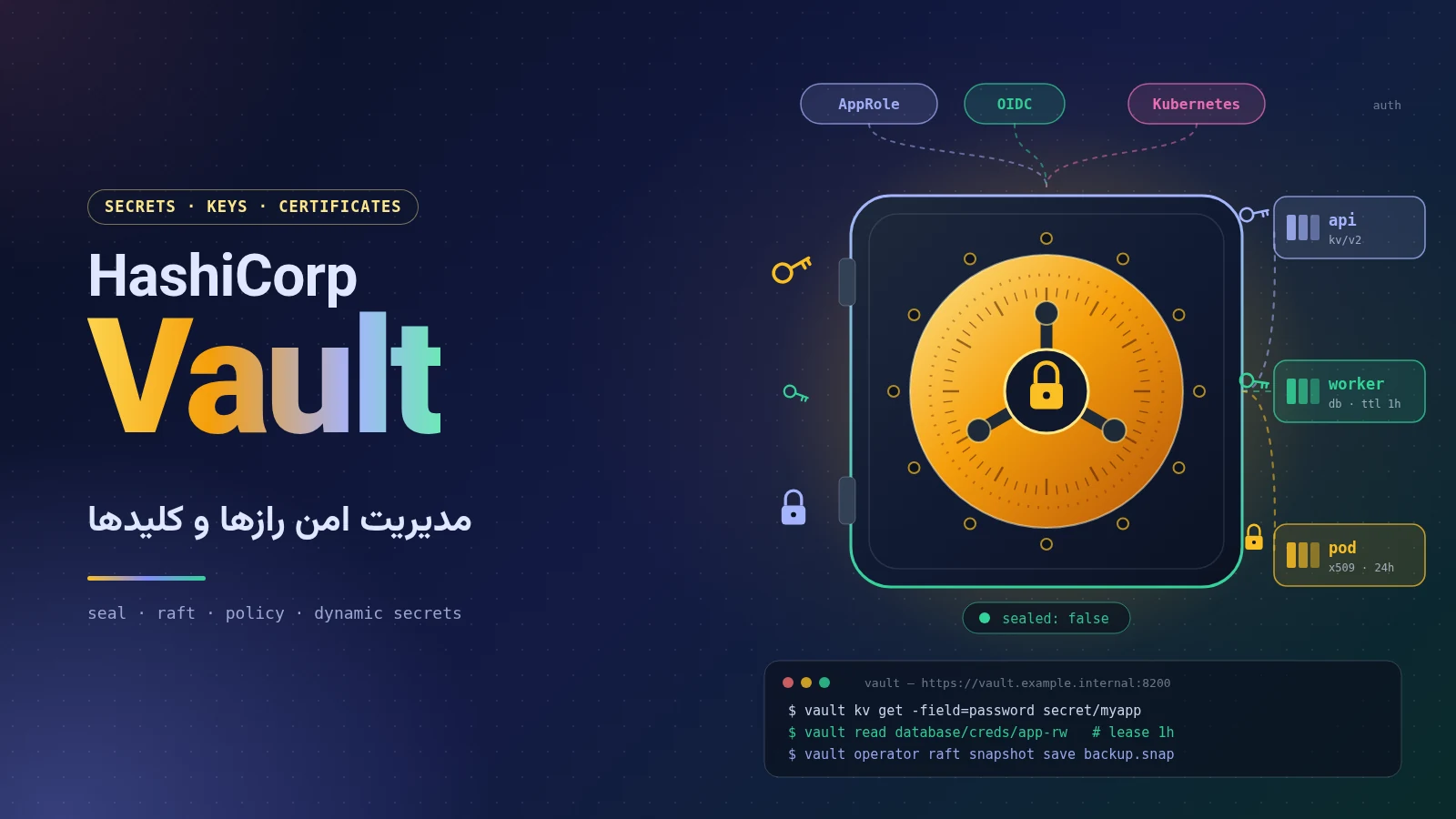
A complete, practical guide to managing secrets with HashiCorp Vault: history, the move to BSL, OpenBao and IBM’s acquisition of HashiCorp, seal/unseal and Raft, tokens and policies, AppRole and Kubernetes, dynamic secrets, PKI and Transit, a Docker Compose setup with TLS, Spring Boot integration and a production checklist.
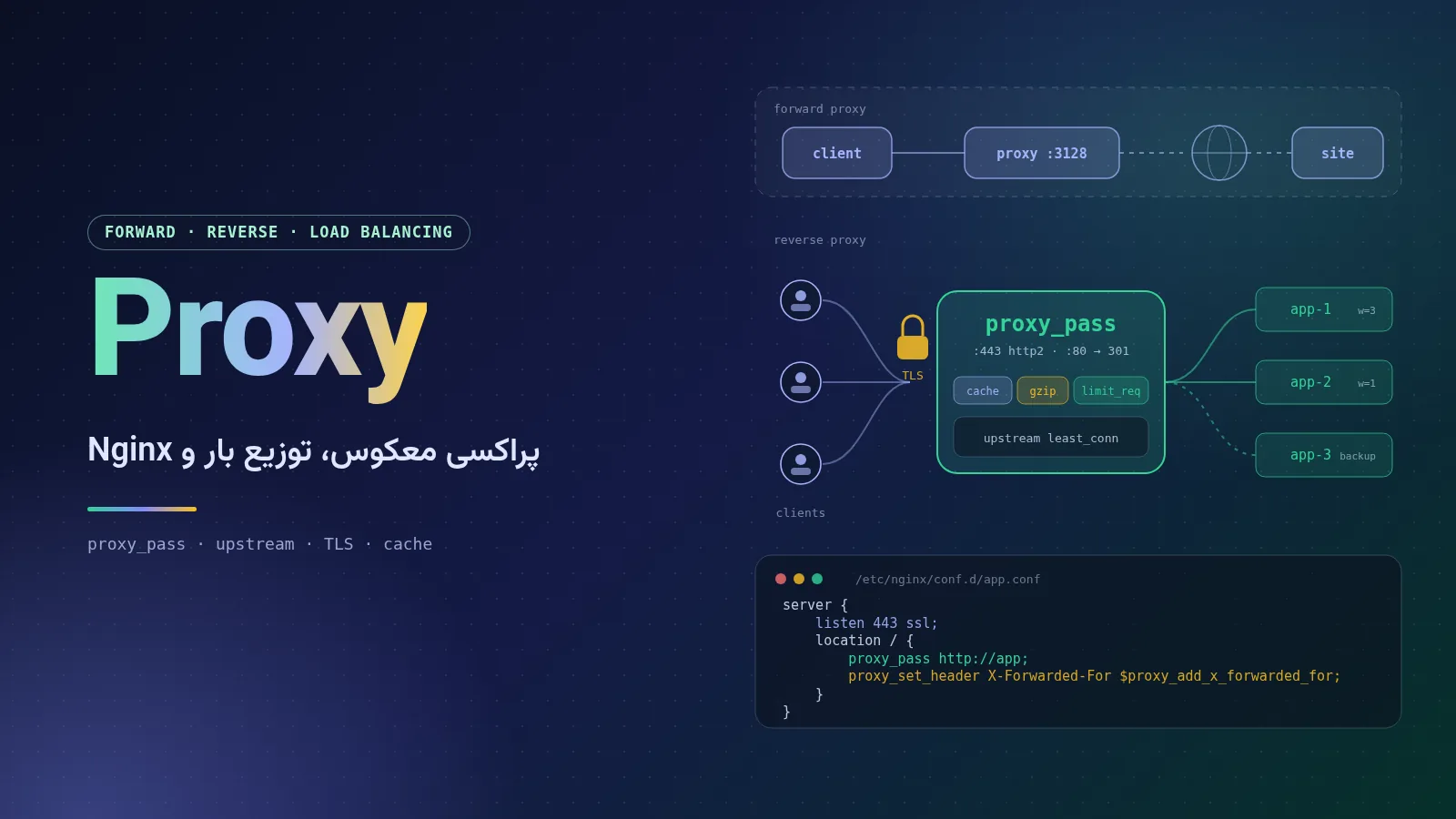
A complete, plain-language guide to proxy servers: forward, reverse and transparent proxies, HTTP and SOCKS, load-balancing algorithms, and a full Nginx tutorial covering installation, configuration structure, reverse proxying, SSL with Let's Encrypt, WebSocket, caching, rate limiting, security headers and troubleshooting 502 and 504 errors.
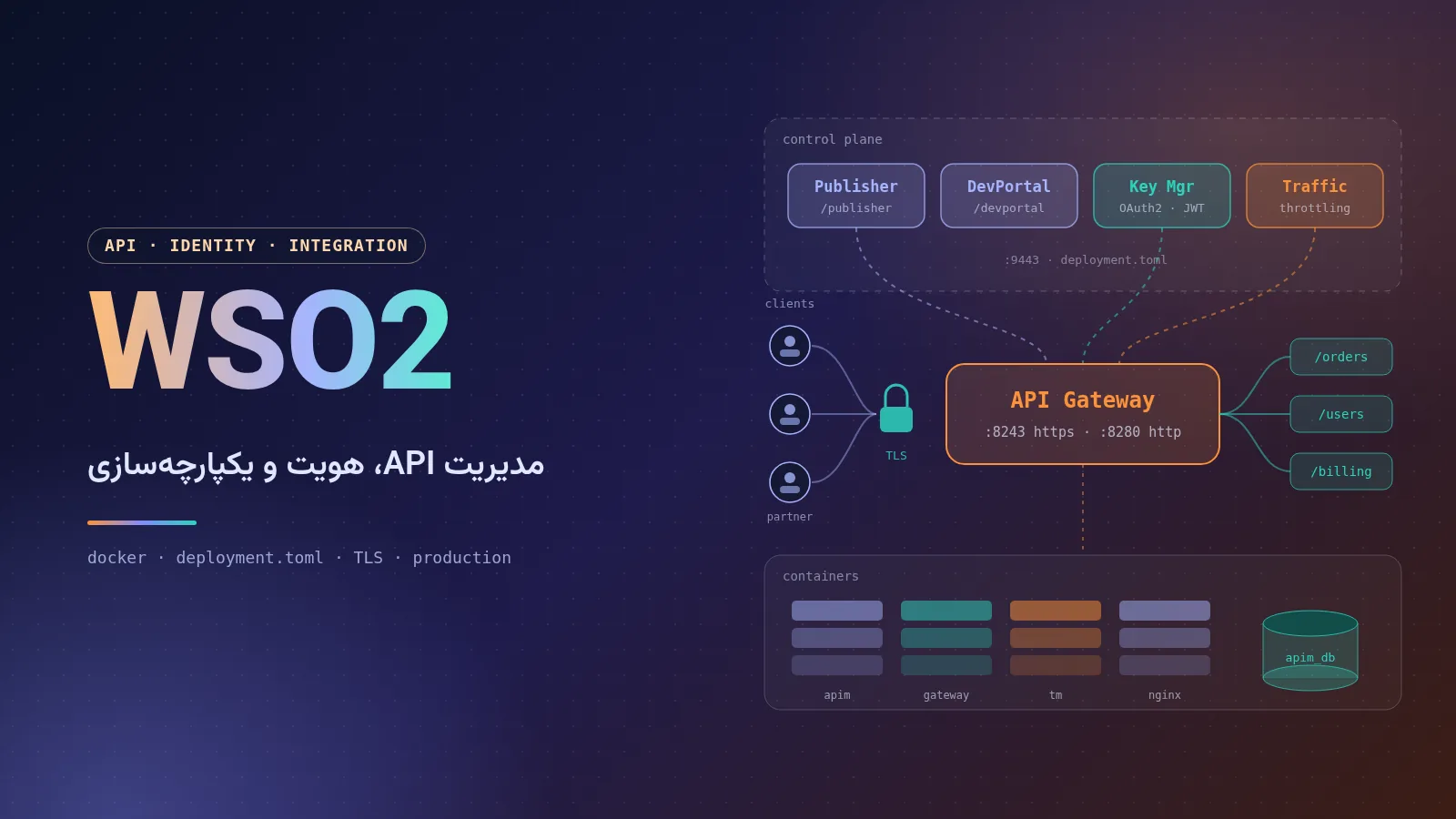
A complete, practical guide to WSO2: the company and its products, the architecture of API Manager 4.7, installation with Docker and Docker Compose, configuring deployment.toml, SSL with Let's Encrypt and Nginx, production deployment tips and a comparison with competitors.
Comments No comments yet
To leave a comment, open this page in a web browser.